

Overview
Anama is an AI platform built for clinics and medical centers. It supports the doctor during the consultation: it listens, interprets and turns it into structured clinical documentation, ready to review and confirm. It's sold per center, as a monthly subscription.
I was the only designer and the product lead, in charge of everything end to end: research, user experience, architecture, interface and prototypes, from the day's schedule to each patient's medical record.
The problem
Doctors spend a huge part of their day on paperwork: they type while seeing patients, complete records at the end of the day and lose time they could spend on care.
On top of that, information ends up scattered, incomplete or tied to each professional, and the clinic loses the record when someone leaves.
The challenge: let doctors see patients face to face, without touching the keyboard, and still end up with a complete record.

From the schedule to a confirmed record
I designed a web app that puts the consultation at the center. The journey starts with a clear daily schedule, showing each patient's status and key alerts like allergies or past visits, and ends with a record confirmed by the doctor.
Recording the consultation, their way
Every doctor works differently. So there are four ways to record the consultation, all ending in the same note:
- Record the consultation while seeing the patient.
- Dictate a summary afterwards.
- Upload an existing audio file.
- Write the note, if they prefer.
AI drafts, the doctor confirms
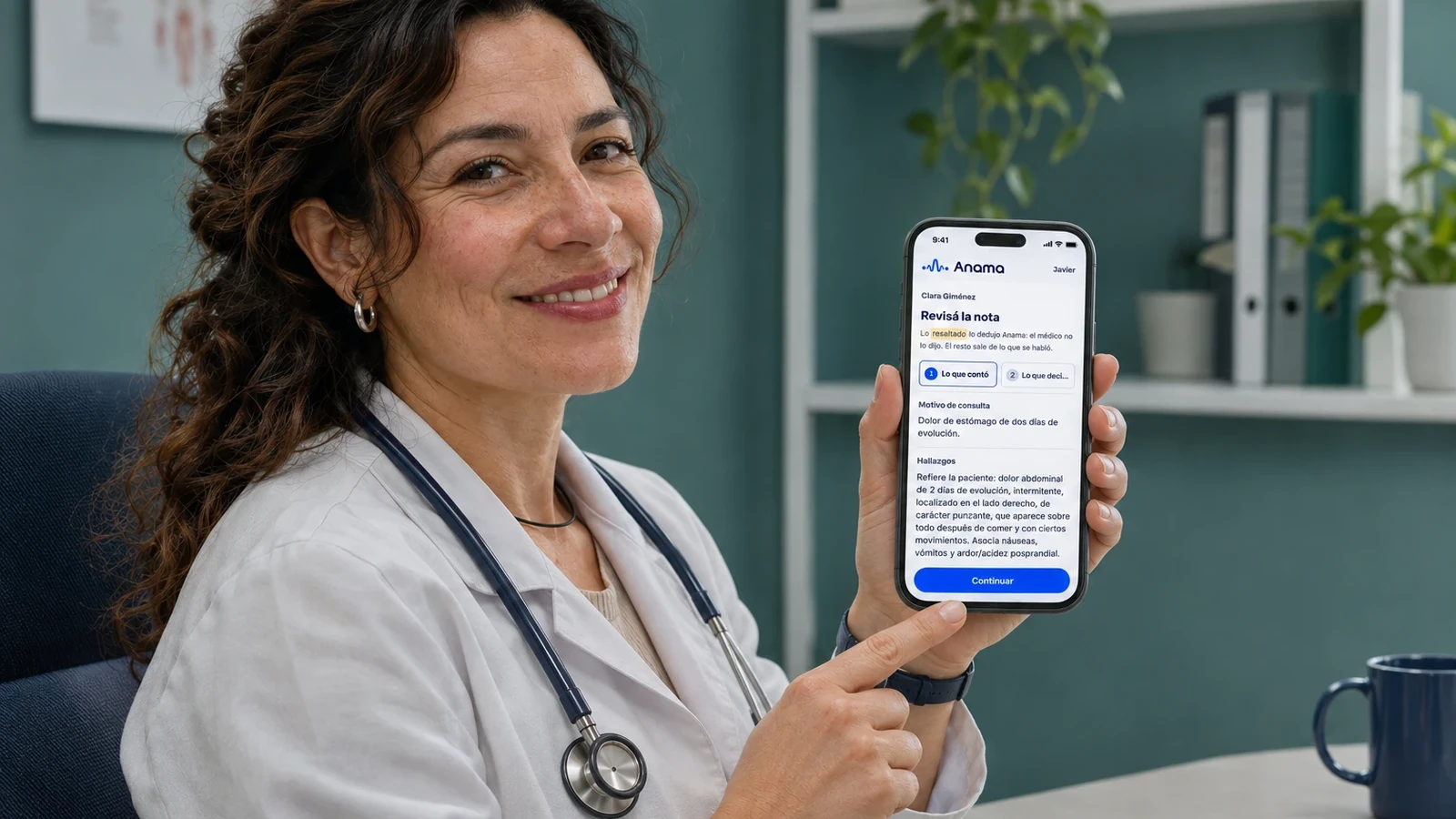
The AI drafts the note and flags what it inferred, so the doctor knows what to review. Nothing enters the record without their approval.
The clinical decision always stays with the doctor: the AI saves the typing, not the judgment.
What research changed
Research changed a lot about the product. Three decisions came straight from watching how it was used:
Doctors weren't reading or checking the full record when Anama delivered the summary.
- Confirm in stages → I redesigned the review into steps: first the doctor confirms the most important parts of the consultation, like the prescription and diagnosis, then the rest. They can't move on without confirming.
- Notes that don't pile up → notes were taking up space in the system, so they're deleted once the consultation is done.
- Consent to record → for legal reasons, the doctor confirms the patient knows the consultation is being recorded before starting.
A record that belongs to the clinic
Each patient has a record that belongs to the institution, not the professional. If someone leaves the clinic, the record stays.
A calm visual system
The identity starts from a calm blue and a single shape: the sound wave of a consultation turning into an organized record. On top of that I built a design system for long clinical lists: clear components, red alerts only when they matter and the patient visible on every screen.
A site that sells per clinic
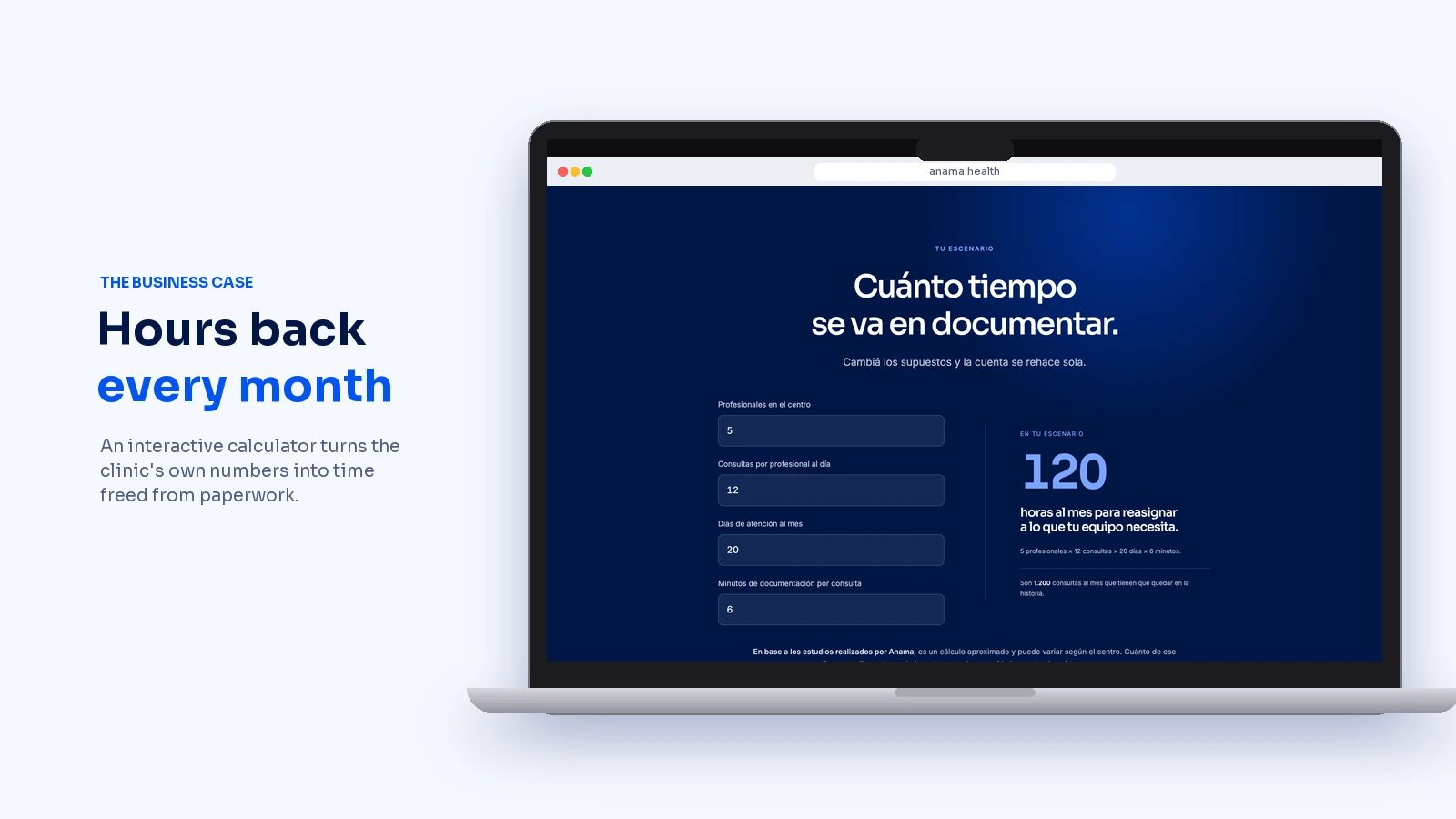
I also designed the website, which explains the product's value and sells it per center: it includes a calculator that shows, with each clinic's own numbers, how many hours a month are freed from paperwork.
Result
- A consultation flow where the doctor sees patients without touching the keyboard.
- A calm, consistent visual system built around the logo's wave.
- A product ready for a six-week pilot in medical centers.